
Lead Apron FAQs
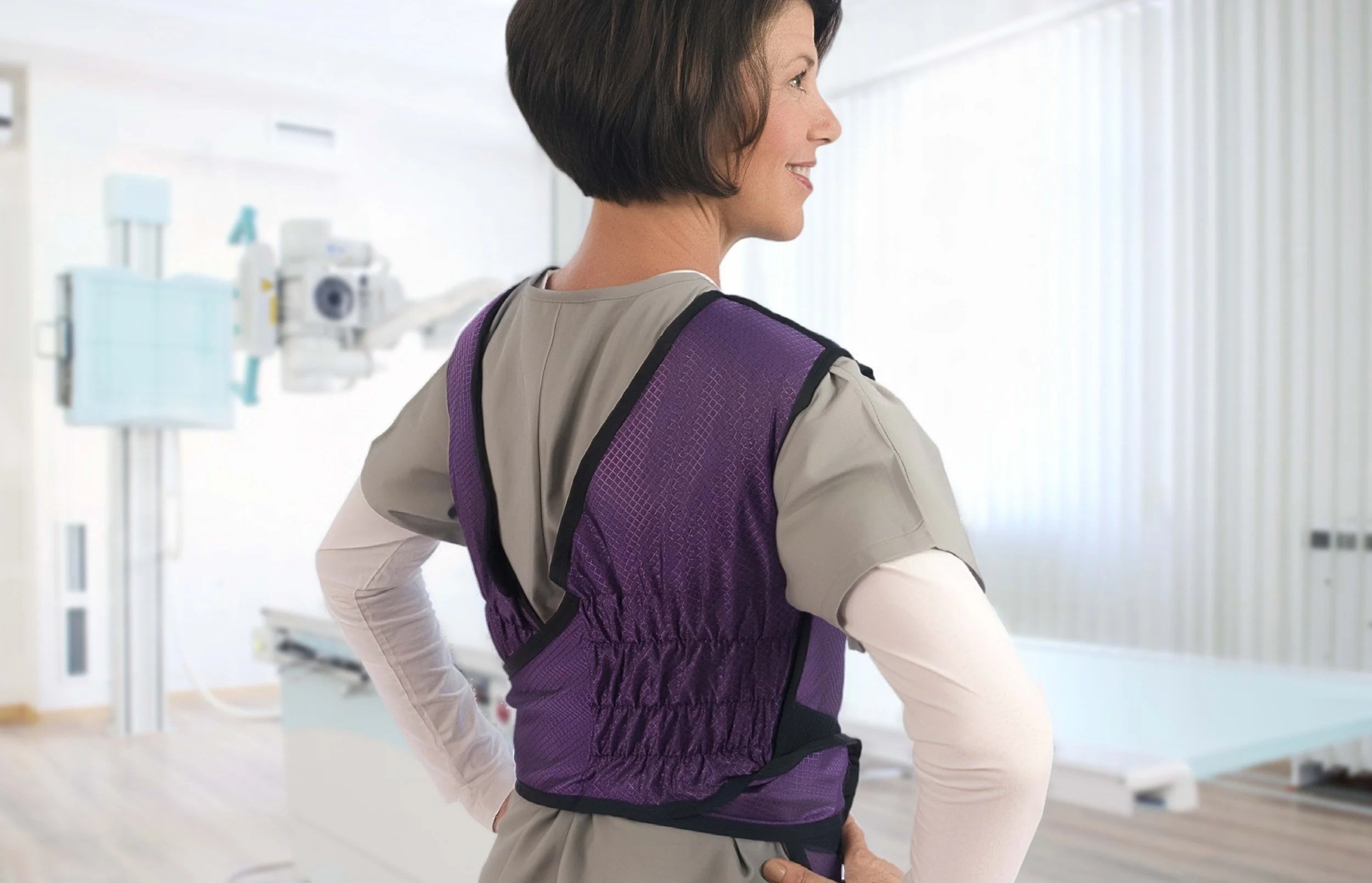
Choosing the right lead apron is about more than selecting a size. From protection levels and materials to inspection and storage, there are several factors that help ensure your staff stays comfortable, protected, and compliant.
Below are answers to the questions we hear most often from our imaging customers, radiation safety teams, and purchasing departments.
-
Yes.
Our lead aprons meet the IEC's (International Electrotechnical Commission) global requirements for protective X-ray garments which ensures consistent measurement of attenuation performance across materials.
BBG Testing Method (Broad Beam Geometry)
Utilized for IEC certification testing
Accounts for scatter radiation and secondary exposure
Provides a more clinically representative assessment of protection performance
-
Each material offers a different balance of protection, weight, and cost.
Regular Lead
Traditional, highest-density material with proven protection
Heavier construction
Lite Ply Lead
Same protection level with ~15% weight reduction
Balance of protection and ergonomics (lead + composite blend)
Non-Lead (Lead-Free Composite)
Engineered with alternative metals (non-lead composite)
~20–25% lighter than traditional lead
The best choice for you depends on your clinical environment, budget, and how long staff wear the apron each day.
-
Regular Lead
0.5mm Pb (+/-7%) at 70kV to 150kV
98% attenuation @ 90kV
96.8% attenuation @ 110kV
95.9% attenuation @ 130kV
94.8% attenuation @ 150kV
Lite Ply Lead
0.5mm Pb (+/-7%) at 70kV to 110kV
96.9% attenuation @ 90kV
95% attenuation @ 110kV
Non-Lead (Lead-Free Composite)
0.5mm Pb (+/-7%) 100kV
97% attenuation @ 90kV
-
The best style depends on your procedures and how long the apron is worn.
Front protection aprons are ideal when exposure comes primarily from the front.
Wraparound aprons provide front and back protection for greater coverage.
Vest and skirt systems distribute weight between the shoulders and hips, helping reduce fatigue during longer procedures.
Choosing the right style can improve both comfort and protection.
-
A properly fitted apron should provide full coverage without restricting movement. Height, chest or waist measurements, and body shape all play a role in selecting the right size. An apron that is too small may leave gaps in protection, while one that is too large can increase fatigue. Whenever possible, staff should try on different sizes and styles before purchasing.
-
Always follow the manufacturer's cleaning recommendations. Use approved disinfectants or mild cleaning solutions, and avoid harsh chemicals that could damage the outer covering.
To help prevent damage to the shielding material, store aprons hanging on a dedicated apron rack or laid flat. Never fold or crease a lead apron.
-
Lead aprons should be visually inspected on a routine basis for signs of wear, including tears, damaged seams, or worn closures. Many facilities also perform annual fluoroscopic or X-ray inspections to detect internal cracks that cannot be seen from the outside. Follow your facility's policies and applicable regulatory requirements.
-
Minor issues, such as worn straps, buckles, or closures, can often be repaired. However, if the protective shielding material is cracked, torn, or punctured, the apron should typically be removed from service and replaced. Always follow your facility's radiation safety policies and the manufacturer's recommendations.
-
A quality lead apron can last for many years with proper care. However, its condition is more important than its age. Replace an apron if inspections reveal cracks, tears, punctures, or other damage that could compromise its protective shielding. Regular inspection helps ensure every apron remains safe to use.
-
The purchase price is only one part of the investment. Consider durability, comfort, warranty, expected lifespan, and replacement frequency. A well-constructed apron that fits properly and is cared for correctly can provide better long-term value while improving staff comfort.
-
Yes. The warranty covers Regular Lead and TL Lite Ply products against imperfections of the material and labor for a period of 2 years from date of purchase. (Non-Lead or LF Strata 300 is limited to a 1 year warranty).
This warranty is limited to the repair or replacement of the garment in case of manufacturer defect. It does not cover any other responsibility.
-
The right accessories help create a complete radiation protection program. Common additions include:
Still Have Questions?
Whether you're purchasing a single apron or outfitting an entire imaging department, our team can help you compare styles, materials, and protection levels to find the right solution for your staff. Browse our selection of lead aprons and radiation protection accessories or contact us for personalized assistance.
Talk to an Imaging Specialist
Call 866-237-3722 or Complete the Form Below
